
Article
Oracle API: The First Public Angel Reading API for Developers
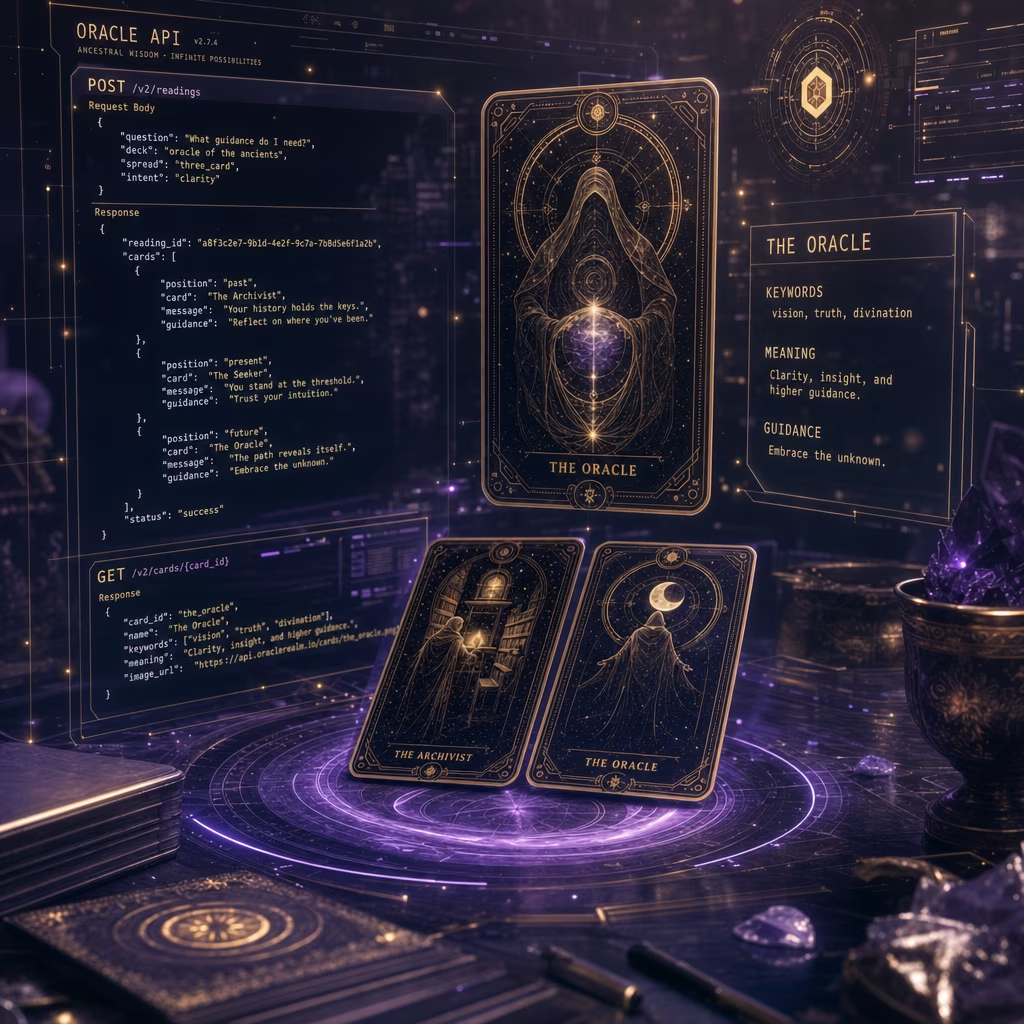
If you have ever wanted to bring angel card readings into your own application, website, or creative project, there is now a way to do it. The Yes No Oracle offers the first publicly available angel reading API, giving developers direct access to a deck of 44 original cards, multiple reading types, and structured response data they can integrate anywhere.
Whether you are building a wellness app, a daily inspiration tool, a chatbot, or something entirely unexpected, the oracle API lets you tap into a complete reading system without having to design one from scratch.
What Is an Oracle API?
An API, or Application Programming Interface, is a way for two pieces of software to communicate. When you use the oracle API, your application sends a request to the Yes No Oracle servers, and it receives a structured response containing card data, interpretations, and reading results.

Think of it as a bridge. On one side is your app. On the other side is a fully developed oracle system with 44 original angel cards bearing evocative names, eight reading types, and rich interpretive content. The API connects the two, so your users get a genuine reading experience without you having to build the entire engine yourself.
If you are new to the oracle system itself, our complete guide to the Yes No Oracle explains how readings work and what the cards represent.
Why This Matters: The First Public Angel Reading API
Until now, developers who wanted to include oracle or angel card functionality in their projects had limited options. They could build a basic randomizer, license a proprietary system, or hard-code a handful of card meanings. None of these approaches offered the depth, variety, or authenticity of a dedicated oracle platform.
The Yes No Oracle API changes that. It is the first publicly available API built around a complete angel card system, and it includes:
- 44 original cards with unique evocative names, artwork references, and layered meanings
- 8 reading types covering destiny (the platform's general yes/no reading), love, guardian angel, life purpose, relationship, fortune, guidance, and health
- Structured JSON responses that are easy to parse and display in any interface
- Consistent, well-documented endpoints designed for developers of all experience levels
This is not a novelty feature. It is a complete oracle infrastructure you can build on top of.
Key Endpoints and How They Work
The API is designed to be straightforward. Here is an overview of the core endpoints and what they return.
Drawing a Card
The most basic operation is a single card draw. You send a request specifying the reading type, and the API returns a card with its name and interpretation text tailored to the reading context. Cards do not carry an upright or reversed orientation: each card has a single, consistent meaning shaped by the reading and position it appears in.
For example, requesting a Destiny reading, the platform's general yes/no reading, returns a card along with a clear yes or no answer and an explanation of what the card suggests in that context.
Multiple Reading Types
You are not limited to yes/no questions. The API supports all eight reading types available on the platform: the classic Destiny reading for yes or no questions, the love oracle, the life purpose oracle, and more. Each reading type shapes the interpretation, so the same card can deliver different guidance depending on the context.
Card Data
You can also query the full card catalog. This is useful if you want to build a card browser, a study tool, or any feature that lets users explore the deck outside of a reading session. Each card entry includes its evocative name, core themes, and associated keywords.
Your free Oracle reading
A free daily reading that puts words to what you already feel.
Trusted by 10k+ users worldwide
Who Is the Oracle API For?
The API is designed for a broad range of developers and creators. Here are some of the most natural use cases.
Wellness and Mindfulness Apps
If you are building an app focused on meditation, journaling, or daily reflection, oracle readings fit naturally into the experience. A morning card draw can serve as a daily intention, a journaling prompt, or a moment of quiet focus. You can see how daily readings work in practice in our guide to the daily angel card.
Chatbots and Conversational Interfaces
Integrating the API into a chatbot lets users ask questions and receive card-based guidance within a conversational flow. The structured JSON responses make it easy to format readings for chat platforms, messaging apps, or voice assistants.
Content and Social Media Tools
Creators can use the API to generate daily card content for newsletters, social media posts, or community channels. Instead of manually selecting and writing about a card each day, the API delivers fresh readings automatically.
Games and Creative Projects
Oracle mechanics work well in interactive fiction, role-playing tools, or any project where randomness with meaning adds depth. The card system provides a richer alternative to dice rolls or coin flips.
Research and Data Analysis
Developers interested in studying patterns in oracle usage, card distribution, or user behavior can use the API to generate structured datasets for analysis.
Getting Started
The onboarding process is designed to be simple:
- Visit the developer documentation on the Yes No Oracle website to review the available endpoints, authentication methods, and response formats.
- Request an API key. Access is free for personal and small-scale projects.
- Make your first request. A basic card draw requires just a few lines of code in any programming language that supports HTTP requests.
- Explore the reading types. Once your basic integration works, experiment with different reading types to find the ones that fit your project best.
The documentation includes example requests and responses for every endpoint, so you can test everything before writing a single line of production code.
Technical Details Worth Knowing
A few points that matter for developers planning a real integration:
- Response format: All responses are returned as JSON, with consistent field naming across endpoints.
- Rate limiting: The API includes reasonable rate limits to ensure stability for all users. These are documented and designed to accommodate most use cases without restriction.
- Authentication: API keys are used for authentication. Each key is tied to a project, making it easy to track usage and manage access.
- Uptime and reliability: The API runs on the same infrastructure as the Yes No Oracle app, which is designed for high availability.
Building Something Meaningful
The oracle API is not just a technical tool. It is an invitation to bring a layer of reflection, intuition, and meaning into digital experiences that often lack it. Whether you are building a wellness product, a creative experiment, or a tool you have not even fully imagined yet, the API gives you a foundation that is both technically solid and spiritually thoughtful.
The deck of 44 original cards, each with its own evocative name and layered interpretation, represents years of development. By opening this system through an API, the Yes No Oracle makes it possible for developers everywhere to build on that foundation and create experiences that help people pause, reflect, and find clarity.
If you want to experience a reading yourself before building with the API, try a free oracle reading on the platform.