
Article
Cartas de angeles vs Tarot: entender las diferencias clave
Si alguna vez ha recorrido una tienda esoterica o buscado lecturas de cartas en linea, habra notado dos categorias principales una al lado de la otra: las cartas oraculo de angeles y los mazos de tarot. Se parecen a primera vista, ambas con ilustraciones evocadoras e imagenes simbolicas. Pero el parecido es principalmente superficial. Son sistemas fundamentalmente diferentes, disenados con filosofias diferentes, estructuras diferentes y propositos diferentes.
Entender esta distincion importa, porque elegir la herramienta equivocada para su pregunta lleva a la frustracion. Usted no usaria una novela cuando necesita una brujula, y no usaria una brujula cuando quiere una historia. Las cartas de angeles y el tarot hacen cada uno algo especifico, y lo hacen bien.
Estructura: 44 cartas vs 78 cartas
La diferencia mas obvia es el tamano. Un mazo de tarot estandar contiene 78 cartas divididas en dos grupos: los Arcanos Mayores (22 cartas que representan grandes arquetipos y puntos de inflexion en la vida) y los Arcanos Menores (56 cartas organizadas en cuatro palos, tipicamente Bastos, Copas, Espadas y Oros). Cada palo contiene cartas numeradas del As al Diez mas cuatro cartas de la corte.
Las cartas oraculo de angeles no siguen ninguna estructura universal, lo cual forma parte de su filosofia de diseno. El mazo de cartas de angeles del Oraculo Si No utiliza 44 cartas originales con nombres evocadores, cada una portando un tema y una energia distintos. No hay palos, no hay progresiones numericas, no hay jerarquia de corte. Cada carta se sostiene por si misma como un mensaje completo.
Esta diferencia estructural moldea todo sobre como funcionan los dos sistemas. La arquitectura elaborada del tarot crea relaciones entre las cartas: el Tres de Copas significa algo en relacion con las otras Copas, en relacion con los otros Tres, en relacion con su posicion en los Arcanos Menores. Las cartas de angeles llevan significado de manera independiente, lo que las hace mas intuitivas y accesibles, especialmente para los principiantes que aprenden a leer cartas.
Sin significados invertidos
En el tarot, cada carta tiene un significado al derecho y un significado invertido. Cuando una carta aparece al reves en una tirada, su interpretacion cambia, a veces sutilmente, a veces dramaticamente. La Emperatriz al derecho puede significar abundancia y cuidado. Invertida, puede indicar bloqueos creativos o descuido del autocuidado. Esto le da al tarot 156 significados posibles a partir de 78 cartas: rico y complejo, pero exigente para el lector.
Las cartas oraculo de angeles no usan inversiones. Cada carta lleva un significado unico y claro sin importar como aparezca. Esto no es una simplificacion por facilidad. Refleja una filosofia diferente sobre como funcionan las lecturas de cartas.
El enfoque de las cartas de angeles confia en que la carta correcta aparecera en el momento correcto. El mensaje no necesita ser invertido o complicado. Necesita ser escuchado con claridad y aplicado a su contexto especifico. Eliminar las inversiones remueve una capa de complejidad interpretativa que puede oscurecer el mensaje en lugar de profundizarlo.

Tono y energia
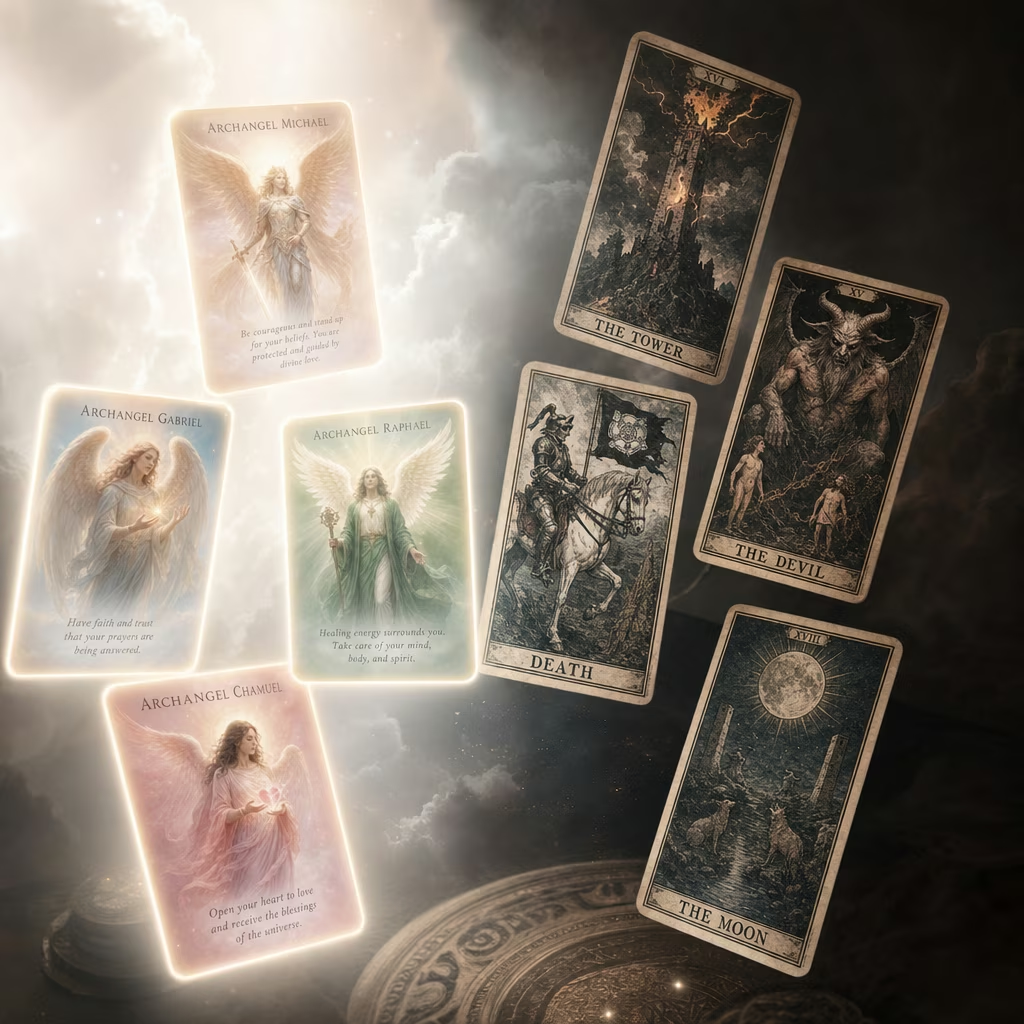
Aqui es donde la diferencia se siente en lugar de contarse. El tarot no rehuye las imagenes dificiles. La Torre muestra una estructura golpeada por un rayo, figuras cayendo desde lo alto. El Diez de Espadas muestra una figura boca abajo con diez hojas en la espalda. La Muerte, el Diablo, el Colgado: el tarot incluye el espectro completo de la experiencia humana, incluyendo sus rincones mas oscuros.
Estas cartas no pretenden asustar, pero si exigen resiliencia emocional del lector. Interpretar la Torre requiere suficiente madurez para ver la destruccion como transformacion, y suficiente habilidad para comunicar eso a un consultante que esta mirando un edificio en llamas en su mesa de lectura.
Las cartas oraculo de angeles adoptan un enfoque fundamentalmente mas suave. Las imagenes tienden hacia lo luminoso, lo esperanzador, lo alentador. Esto no significa que las cartas de angeles eviten verdades dificiles. Una carta puede senalar la necesidad de soltar, de liberar, de confrontar algo que usted ha estado evitando. Pero enmarca ese mensaje en el lenguaje del crecimiento y el apoyo, en lugar de la crisis y la agitacion.
Para muchas personas, especialmente aquellas que buscan orientacion diaria o su primera lectura de cartas, esta diferencia de tono importa enormemente. El enfoque mas suave no es mas debil. Simplemente lo encuentra donde usted esta, sin el impacto que algunas imagenes del tarot pueden producir.
Curva de aprendizaje
El tarot exige estudio. Comprender las relaciones entre los Mayores y los Menores, aprender las asociaciones elementales de cada palo, captar las progresiones numerologicas, memorizar significados al derecho e invertidos: esto toma meses o anos de practica dedicada. Muchos lectores de tarot pasan decadas profundizando su comprension y aun descubren nuevas capas.
Las cartas oraculo de angeles estan disenadas para la accesibilidad. El mazo del Oraculo Si No asocia cada carta con un tema claro, y los nombres evocadores llevan una energia que habla incluso antes de que usted lea la interpretacion. No necesita memorizar un sistema. Necesita estar presente, ser honesto con su pregunta y estar dispuesto a escuchar lo que la carta le refleja.
Tu tirada de oráculo gratis
Una tirada diaria gratuita que pone en palabras lo que ya sientes.
10k+ usuarios en el mundo
Esto no hace que las cartas de angeles sean superficiales. La profundidad en una lectura de cartas de angeles viene de su contexto personal, de su disposicion a quedarse con el mensaje y de la forma en que lo aplica a su situacion. La profundidad esta en la experiencia de la lectura, no en el marco interpretativo.
Estilo de lectura
Las lecturas de tarot tienden a ser narrativas. Un lector habil teje las cartas en una historia: aqui es de donde usted viene, aqui es donde esta, aqui es hacia donde van las cosas si continua en este camino. Las multiples cartas en una tirada interactuan entre si, creando una imagen rica y en capas.
Las lecturas de cartas de angeles tienden a ser reflexivas. Cada carta es un espejo, y la lectura se trata menos de construir una narrativa y mas de reconocer lo que la carta revela sobre su estado interior, sus necesidades o su proximo paso. Una carta de angel diaria le da un tema unico para llevar durante el dia, no una historia para analizar.
El Oraculo Si No ofrece ocho tipos de tiradas tematicas que utilizan la energia de las cartas de angeles con tiradas estructuradas. Ya sea que explore el amor, el proposito de vida o la orientacion general, las lecturas combinan la claridad de las cartas oraculo con suficiente estructura posicional para dar direccion.
Cual es la adecuada para usted?
Si le atrae el estudio simbolico profundo, disfruta de la complejidad y quiere una practica de toda la vida de interpretacion en capas, el tarot es un camino rico y gratificante. Recompensa la dedicacion con una perspicacia cada vez mas profunda.
Si quiere claridad, accesibilidad y un enfoque mas suave que aun asi ofrezca orientacion significativa, las cartas oraculo de angeles probablemente sean la mejor opcion. Son especialmente adecuadas para la practica diaria, para principiantes y para cualquiera que quiera los beneficios reflexivos de la lectura de cartas sin la pronunciada curva de aprendizaje.
Muchos practicantes experimentados usan ambos: tarot para la exploracion profunda y cartas de angeles para la reflexion diaria y la orientacion rapida. No hay ninguna regla que diga que debe elegir uno. Pero entender lo que cada herramienta hace mejor le ayuda a alcanzar la correcta en el momento correcto.