
Article
Oraculo Si o No vs Tarot: cual responde mejor a su pregunta?
Usted tiene una pregunta. Es una pregunta de si o no, clara y especifica, y quiere una respuesta igual de directa. Entonces busca "tarot si o no" y se encuentra ante una eleccion inesperada: debe usar cartas de tarot o un oraculo para este tipo de pregunta? La respuesta importa mas de lo que podria pensar, porque estas dos herramientas fueron disenadas para propositos muy diferentes, y solo una de ellas fue creada desde cero para manejar preguntas binarias.
El Oraculo Si No existe especificamente para esto: preguntas claras, respuestas claras, sin ambiguedad. Pero el tarot tiene sus propias fortalezas, y entender la diferencia le ayuda a elegir la herramienta correcta para el momento que esta viviendo.
Lo que el tarot realmente hace
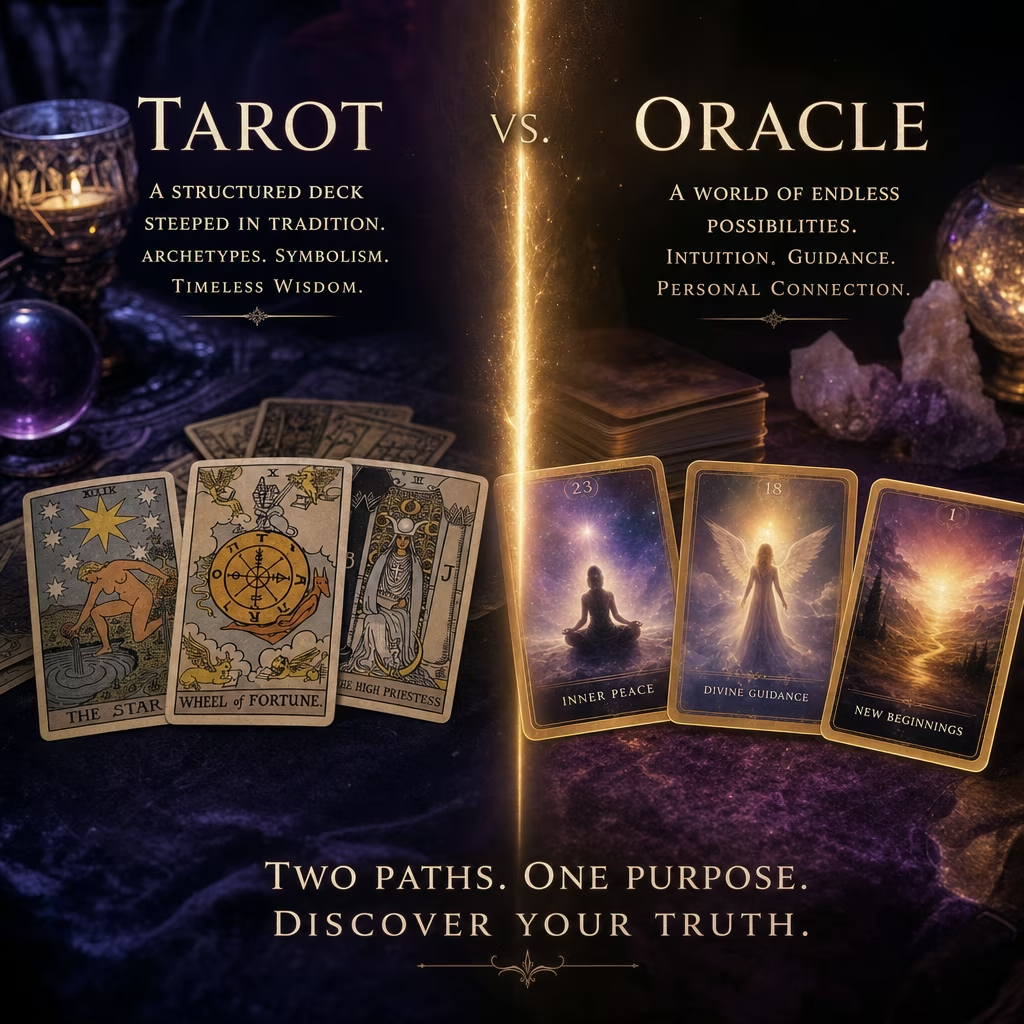
El tarot es un sistema estructurado de 78 cartas divididas en Arcanos Mayores (22 cartas que representan grandes temas de la vida) y Arcanos Menores (56 cartas organizadas en cuatro palos). Cada carta lleva un simbolismo en capas, y las lecturas tipicamente involucran multiples cartas colocadas en posiciones que representan diferentes aspectos de una situacion: influencias pasadas, circunstancias presentes, posibilidades futuras, factores ocultos, consejos.
Esta complejidad es la fortaleza del tarot cuando usted esta explorando una situacion con matices. Si quiere comprender la dinamica de una relacion, las fuerzas que moldean una transicion de carrera o el paisaje emocional debajo de una decision dificil, la profundidad del tarot es valiosa.
Pero esa misma complejidad se convierte en una debilidad cuando su pregunta es simple. Pregunte al tarot "Debo aceptar esta oferta de trabajo?" y podria recibir tres cartas que hablan de ambicion, miedo al cambio y potencial creativo. Hermoso, perspicaz, pero ninguna de ellas dice si o no. Usted se queda interpretando, y la interpretacion introduce dudas, sesgos personales y confusion, exactamente lo que intentaba evitar.
Lo que un oraculo de si o no hace de manera diferente
Un oraculo disenado para preguntas de si o no elimina las capas que hacen al tarot poderoso para la exploracion pero frustrante para las decisiones. El Oraculo Si No utiliza un mazo de 44 cartas originales con nombres evocadores, y cada carta lleva una energia direccional clara: si, no o tal vez.
No hay ambiguedad sobre la respuesta en si. La carta que usted saca apunta en una direccion. El matiz viene del tema de la carta y del contexto de su pregunta, lo que agrega profundidad sin comprometer la claridad.
Esto no es una limitacion. Es una decision de diseno. Cuando necesita saber si debe avanzar o esperar, lo ultimo que quiere es una herramienta que responde con poesia cuando necesita una brujula.

Las diferencias estructurales que importan
Entender por que estas herramientas producen resultados diferentes se reduce a como estan construidas.
Tamano del mazo y enfoque. El tarot usa 78 cartas con interrelaciones complejas entre palos, numeros y arquetipos. El Oraculo Si No usa 44 cartas, cada una disenada para abordar una cualidad o energia especifica relevante para la toma de decisiones. Menos cartas significa menos ruido y mas senal.
Significados invertidos. En el tarot, cada carta puede aparecer invertida (al reves), lo que a menudo invierte o complica su significado. Una carta que significa abundancia al derecho puede significar escasez al reves. Esto duplica las posibilidades interpretativas, lo cual es util para la exploracion pero contraproducente para la claridad del si/no. Las cartas oraculo en la plataforma del Oraculo Si No no usan inversiones.
Complejidad de las tiradas. Las tiradas de tarot pueden involucrar de una a diez o mas cartas, cada una en una posicion especifica con su propio significado. Cuantas mas cartas, mas interpretacion se requiere. Las lecturas oraculo para preguntas de si/no usan configuraciones disenadas para entregar una respuesta clara con contexto complementario, no un ensayo.
Tiempo de lectura. Una lectura de tarot profunda toma de 15 a 30 minutos con un lector experimentado. Una lectura de oraculo si o no toma momentos, lo cual importa cuando usted esta en medio de una decision y necesita claridad ahora, no despues de una sesion de meditacion.
Cuando el tarot es la mejor opcion
El tarot se gana su reputacion cuando su pregunta es abierta. "Que necesito entender sobre mi relacion actual?" es una pregunta de tarot. "Que temas daran forma a mi proximo ano?" es una pregunta de tarot. Cada vez que quiera exploracion, narrativa y multiples angulos sobre una situacion compleja, el sistema de 78 cartas del tarot esta a la altura.
El tarot tambien es valioso cuando usted no esta listo para una respuesta directa. A veces necesita sentarse con una situacion, examinarla desde diferentes perspectivas y dejar que la comprension surja gradualmente. El tarot acompana ese proceso con elegancia.
Tu tirada de oráculo gratis
Una tirada diaria gratuita que pone en palabras lo que ya sientes.
10k+ usuarios en el mundo
Cuando el oraculo es la mejor opcion
El oraculo gana cada vez que su pregunta tiene una estructura binaria. "Debo hacer este viaje?" "Es el momento adecuado para tener esa conversacion?" "Cambiar de trabajo mejorara mi situacion?" Estas son preguntas de si o no, y merecen una herramienta disenada para respuestas de si o no.
El oraculo tambien es preferible cuando la rapidez importa. Si usted esta en una encrucijada y necesita actuar, pasar 30 minutos interpretando una tirada de Cruz Celta no es practico. Una lectura de oraculo rapida le da direccion en el tiempo que toma sacar una carta.
Y el oraculo sobresale cuando usted ya ha hecho la exploracion. Quiza ha escrito en su diario, hablado con amigos, sopesado los pros y contras, y comprende la situacion a fondo. Lo que necesita ahora no es mas analisis. Es un impulso, un reflejo de la direccion hacia la que su intuicion ya se inclina. Eso es exactamente lo que el oraculo de si o no proporciona.
La pregunta decide la herramienta
La clave es simple: no se trata de cual herramienta es mejor. Se trata de cual herramienta corresponde a su pregunta. Intentar obtener una respuesta de si o no del tarot es como usar un telescopio para leer un letrero de calle. La herramienta es poderosa, pero esta apuntando en la direccion equivocada.
Antes de elegir una herramienta, afine su pregunta. Si su pregunta se reduce naturalmente a si o no, use el oraculo. Si su pregunta se abre hacia "como", "por que" o "que", el tarot o una tirada de oraculo mas exploratoria podria servirle mejor.
El Oraculo Si No ofrece ocho tipos de tiradas diferentes, incluyendo tiradas especializadas para el amor, la carrera y el proposito de vida. Cada una esta construida para la claridad, no la complejidad.
Una prueba practica
La proxima vez que se sorprenda buscando "tarot si o no", haga una pausa y preguntese: que necesito realmente ahora? Si necesita comprension, profundice con el tarot. Si necesita una respuesta, vaya directo con el oraculo.
Las mejores lecturas no son las mas complejas. Son las que corresponden a la pregunta que realmente esta haciendo.