
Article
Angel Card Reading Journal: Track Your Readings and Discover Patterns Over Time
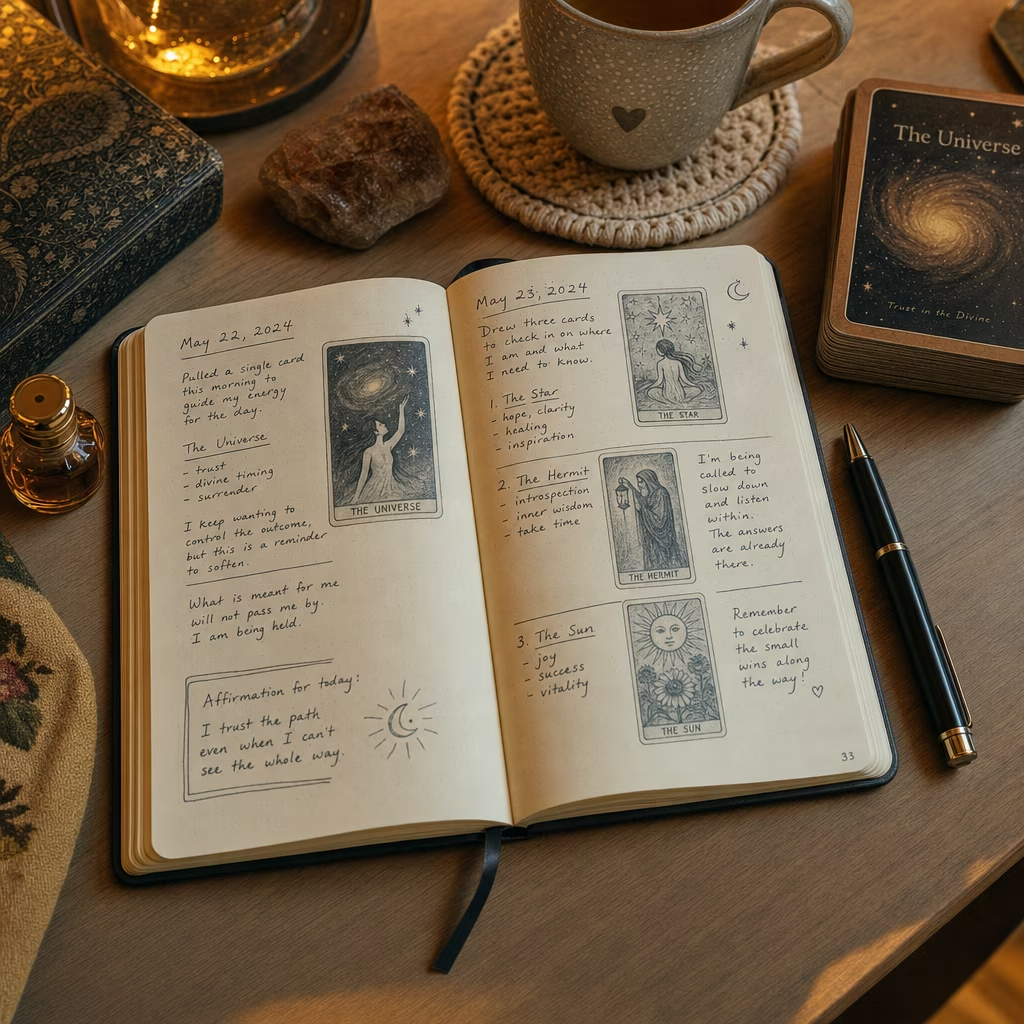
A single oracle card reading can offer a flash of clarity. But the real power of oracle practice does not live in isolated moments: it builds over time, reading after reading, as patterns emerge and your relationship with the cards deepens.
That is the idea behind the reading journal on yes-no-oracle.com. Every reading you do on the platform is automatically saved, organized by date, and available to review whenever you want to look back at the guidance you have received.
Whether you have done five readings or five hundred, your journal becomes a living record of the questions you have asked, the cards you have drawn, and the insights that followed.
What Is the Reading Journal?
The reading journal is a built-in feature on yes-no-oracle.com that stores your past readings in one accessible place. Each journal entry captures:
- The date and time of the reading
- The type of reading you selected
- The question you asked
- The card you drew
- The interpretation provided
Think of it as a personal timeline of guidance. You do not need to write anything down manually, take screenshots, or try to remember which card came up last Tuesday. The journal handles the record-keeping so you can focus on reflection.

Why Tracking Your Readings Matters
Most people approach oracle readings as one-off experiences. They ask a question, receive an answer, and move on. There is nothing wrong with that approach, but it leaves a lot of value on the table.
Here is what changes when you start tracking your readings consistently.
You Start Seeing Patterns
When the same card appears three times in two weeks, it is worth paying attention. Recurring cards often point to themes your subconscious is working through, even if you have been asking different questions each time.
The journal makes these patterns visible. Instead of relying on memory, which is unreliable and selective, you have a clear record that reveals what keeps showing up.
You Notice How Questions Evolve
Looking back at your journal entries over a few months, you will likely notice a shift in the kinds of questions you ask. Early entries might focus on immediate concerns: "Should I take this job?" or "Is this relationship right for me?" Over time, many people find their questions becoming more reflective and open-ended.
This evolution is itself a sign of growth. The journal lets you witness it.
You Build a Deeper Connection with the Cards
The 44 cards in the Yes No Oracle deck each carry a name and a layered meaning. When you encounter "The Mirror" for the first time, you read the interpretation and move on. When you encounter it for the fifth time across different contexts, you begin to develop a personal, nuanced understanding of what that card means to you specifically.
Your journal is where this relationship develops. It is the difference between meeting someone once at a party and knowing them over years of conversation.
You Can Measure Your Own Growth
Perhaps six months ago you were consumed with anxiety about a decision that, looking back, resolved itself naturally. Your journal entries from that period will show the intensity of your concern, and your more recent entries will show how far you have come. This kind of perspective is genuinely therapeutic, and it is only available when you have a record to look back on.
Your free Oracle reading
A free daily reading that puts words to what you already feel.
Trusted by 10k+ users worldwide
How to Use the Reading Journal Effectively
Simply having your readings saved is a good start, but actively engaging with your journal amplifies its value. Here are practical ways to get the most from it.
Review Weekly
Set aside ten minutes at the end of each week to scroll through your recent entries. Look for:
- Cards that appeared more than once
- Questions that share a common theme
- Readings where the guidance felt especially accurate or surprising
This weekly review turns passive data into active insight.
Add Personal Notes
While the journal automatically saves the card and interpretation, your own thoughts are what make each entry truly valuable. After a reading, take a moment to note:
- How the card made you feel
- What situation in your life it seems to connect to
- Whether the guidance aligns with or challenges your current thinking
These personal annotations transform the journal from a log into a reflective practice.
Compare Readings on Similar Topics
If you have asked multiple questions about the same area of life, compare those entries side by side. Did the cards shift over time? Did the tone of guidance change from cautionary to encouraging? These comparisons often reveal movement in situations you thought were stuck.
For example, if you have done several love oracle readings over the course of a month, reviewing them together might show a clear arc from uncertainty to clarity.
Use the Journal Before Your Next Reading
Before you ask the oracle a new question, glance at your recent entries. This practice helps you:
- Avoid asking the same question repeatedly out of anxiety
- Frame better, more specific questions based on what you have already learned
- Approach the reading with context rather than starting from scratch each time
Our guide on how to ask a yes or no question pairs well with this habit.
Journaling as a Path to Self-Awareness
Oracle practice, at its core, is a tool for self-reflection. The cards do not predict the future in a literal sense: they provide a mirror, a framework for examining what you already feel and know but might not have articulated yet.
The reading journal extends this mirror across time. It lets you see not just where you are today, but where you have been and, by implication, where you might be heading.
Many users report that the journal becomes their favorite feature on the platform, not because of any single entry, but because of the cumulative picture it paints. It is one thing to draw the card "The Grimoire" and read about wisdom. It is another thing entirely to see it appear at three critical turning points in your life and realize that you already knew what to do each time.
Combining the Journal with Other Features
The reading journal works naturally alongside other features on the platform:
- Daily angel card draws create a consistent stream of entries that are perfect for pattern recognition.
- Guidance oracle readings on specific topics build thematic threads you can trace through your journal.
- The gift reading feature lets you share a reading with someone else, and your own journal records the context around when and why you sent it.
- The printable card kit gives you a physical complement to your digital journal, bridging hands-on practice with digital tracking.
Getting Started
Your journal begins the moment you do your first reading, with nothing else to set up, no subscription required. Simply visit the oracle, ask your question, draw your card, and your journal starts building itself.
If you have been using the platform for a while, your past readings are waiting for you. Open your journal, scroll back to your earliest entry, and see where the journey began. You might be surprised by what you find.
Frequently Asked Questions
Is the reading journal feature free?
Yes, the reading journal is included free with every account on yes-no-oracle.com: every reading you do is automatically saved and organized for you to review. Only manually adding a reading to the journal, for example from a physical deck, requires an Full Access subscription.
Do I need to create an account to use the reading journal?
Yes, an account is all you need: your readings begin saving automatically as soon as you use the platform, no subscription required.
Can I add personal notes to my journal entries?
Yes, you can add your own reflections and notes to each journal entry. Personal annotations help you track not just what card appeared, but what it meant to you in that specific moment.
How does the reading journal help me improve my oracle practice?
The journal helps you spot recurring cards, track how your questions evolve over time, compare readings on similar topics, and measure your personal growth. These patterns are only visible when you have a consistent record of your readings.
Can I see patterns in which cards appear most often?
Yes, by reviewing your journal entries over time, you can identify cards that appear frequently. Recurring cards often point to themes your subconscious is working through and deserve special attention.