Article
Love Tarot Reading: What It Reveals and More
Love questions are the most common reason people reach for a deck of cards. Not career, not money, not health. Love. Whether the question is about a new connection, a long partnership, or a breakup that still stings, people want to know where they stand emotionally, and a love tarot reading is one of the most popular ways to seek that clarity. If you have been thinking about getting a love reading, this guide covers what to expect, what makes a reading genuinely useful, and where to find alternatives that might serve your question even better.
What a love tarot reading explores
A love tarot reading uses the structure of the traditional 78-card tarot deck to examine the emotional and relational dimensions of your life. Depending on the spread, it can address a wide range of romantic territory: the energy between you and another person, hidden feelings that have not surfaced yet, obstacles standing in the way of connection, the emotional trajectory of a relationship, and even your own readiness for love.
The cards themselves carry layered meanings. The Lovers card does not simply mean "love." It speaks to choice, alignment, and deep compatibility. The Two of Cups suggests mutual attraction and emotional reciprocity. The Tower might signal an unexpected disruption in a relationship. Each card interacts with those around it, creating a reading that is less like a single answer and more like a conversation about your situation from several angles.
This is tarot's strength in the love domain: it gives you texture. It does not just say yes or no to your question. It asks you to sit with complexity, examine your own emotions, and consider dynamics you might have overlooked.
Common love tarot spreads and what they reveal
Several tarot spreads are designed specifically for love questions. Each one structures the reading differently.
The relationship spread (three cards). This layout places one card for you, one for the other person, and one for the relationship itself. It is simple but effective for understanding the dynamic between two people.
The Celtic Cross for love. The classic ten-card spread, adapted with romantic intention. It covers past influences, present feelings, hidden factors, external forces, hopes, fears, and a projected outcome. It is thorough but demands experience to interpret well.
Past, present, future. Three cards laid in sequence to trace the arc of a romantic situation. Where it has been, where it is, and where it could be heading. This is often the starting point for beginners.
The "should I stay or go" spread. A focused layout that places cards representing what staying offers, what leaving offers, and what you need most right now. It is popular for people at a crossroads in a relationship.
Each spread has its uses. The key is matching the layout to the specificity of your question rather than defaulting to the most complex option available.
What makes a good love reading
Not all love readings are created equal. The difference between a reading that leaves you more confused and one that genuinely helps comes down to a few things.
Honesty with yourself. A love reading works best when you approach it willing to hear what comes up, not just what you want to hear. If you are only looking for confirmation that someone loves you back, you are not really asking a question. You are looking for reassurance, and no card can provide that sustainably.
Open questions. "Will he come back to me?" is a closed, anxious question that sets you up for disappointment regardless of the answer. "What do I need to understand about this connection?" opens space for insight. The quality of your question directly shapes the quality of your reading.
No fixation on specific outcomes. The moment you need the cards to say one particular thing, the reading loses its power. A good love reading illuminates your situation. It does not guarantee a specific result.
Willingness to reflect. A reading is not a verdict. It is a starting point for reflection. The cards lay something on the table, and then the real work happens inside you, as you consider what that message means for your life and your choices.
Love tarot vs love oracle reading
If you have searched for a love tarot reading, you may have come across oracle card readings as well. The two are related but structurally different, and understanding the distinction helps you choose the right tool.
Tarot uses a fixed system of 78 cards with suits, numbered progressions, and reversed meanings. This structure creates depth, narrative, and ambiguity. Oracle cards, by contrast, have no universal structure. A deck might have 36, 44, or 60 cards, each designed around a specific theme. There are no suits, no mandatory reversals, and no complex positional interplay.
For love questions specifically, this difference matters. Tarot excels when you want to explore the full emotional landscape of a relationship, sit with ambiguity, and consider multiple perspectives. Oracle cards excel when you have a focused question and you want a clear, direct answer: yes, no, or a nudge in a specific direction.
Neither approach is superior. They serve different needs. If your question is "What is the emotional dynamic between me and this person?", tarot's layered system is well-suited to that exploration. If your question is "Should I tell them how I feel?", an oracle designed for directional answers will often serve you better. For more on how tarot and oracle cards compare for yes-or-no questions, that breakdown covers the structural differences in depth.

The Yes No Oracle Love spread
The Yes No Oracle offers a dedicated Love spread built specifically for romantic and emotional questions. It is one of eight reading types on the platform, alongside spreads for destiny, guardian angel, guidance, health, life purpose, relationship, and fortune.
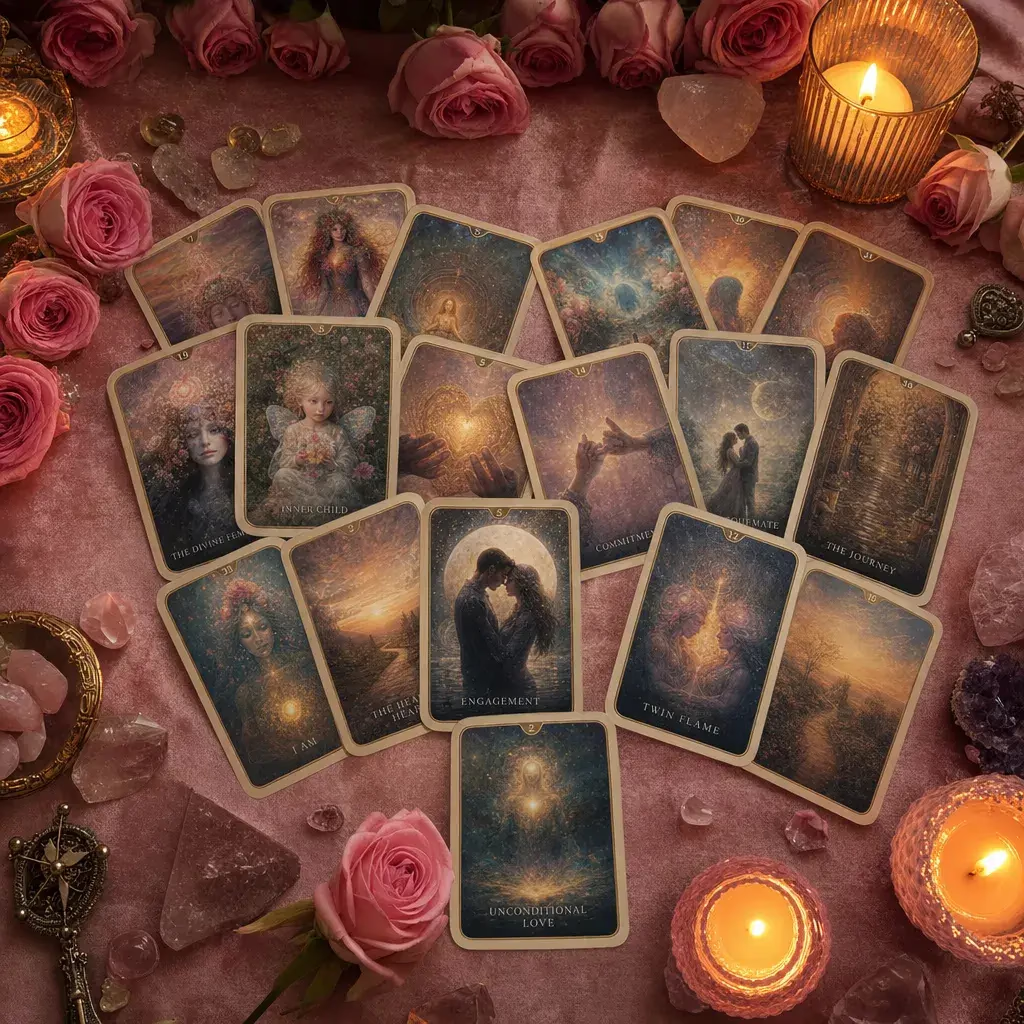
The Love spread uses five cards drawn from a deck of 44 original cards. Each card lands in a specific position that illuminates a different facet of your romantic situation: how to prepare for a new encounter, their obstacles, your obstacles, advice to eliminate those obstacles, and a message regarding this new relationship.
What makes this spread different from a general tarot love reading is its design focus. It was built for the kinds of questions people actually ask about love. Not "Tell me everything about my love life," but "Is this relationship right for me?" or "Does this person feel the same way?" The structure channels your question into a clear, readable answer rather than an open-ended narrative.
If you want to start exploring the oracle's approach to love questions, the love oracle cards guide walks through the five positions in detail and explains how each one contributes to the full reading. For broader relationship dynamics beyond romance, the relationship oracle spread offers another angle.
Questions to ask in a love reading
The question you bring to a love reading shapes everything. Here are examples that tend to produce the most useful responses.
- "What do I need to understand about my current relationship?"
- "What is blocking me from finding a genuine connection?"
- "Is this person aligned with what I truly need?"
- "What should I focus on to improve my love life right now?"
- "Am I ready for a new relationship?"
Notice that these questions are open enough to allow insight but specific enough to be actionable. They avoid demanding a particular outcome and instead invite honest reflection. If you want to sharpen your question-asking skills, the guide to asking yes or no questions is useful even beyond the oracle context, because learning to frame direct, honest questions improves any reading, tarot or oracle.
Avoid questions like "When will I meet my soulmate?" or "Does he think about me every day?" These set expectations the cards cannot fulfill and often lead to compulsive re-reading rather than genuine reflection.
When a love reading helps most (and when to step back)
A love reading is most valuable when you are at a genuine decision point, when you feel stuck in a pattern, when you need perspective on a dynamic you are too close to see clearly, or when you simply want to check in with your own emotional state before making a choice.
It helps when you approach it as one input among many, not as the sole authority on your love life. A good reading can surface feelings you have been avoiding, highlight dynamics you have not named, or give you the nudge you need to act on something you already know.
But there are moments when stepping back from readings is the healthier choice. If you find yourself doing love readings daily, asking the same question repeatedly, or feeling more anxious after each reading rather than less, that is a signal. The cards are not the problem. The pattern is. Compulsive reading is usually a sign that you need a conversation, with the other person, with a friend, or with yourself, not another card draw.
A reading is a mirror, not a crutch. Use it to see more clearly, then put it down and live your life with what you saw.
Your free Oracle reading
A free daily reading that puts words to what you already feel.
Trusted by 10k+ users worldwide
Conclusion
A love tarot reading can be a meaningful way to explore the emotional dimensions of your romantic life. Tarot's layered structure gives you depth, nuance, and multiple angles on complex situations. But when your question is direct and you want clarity rather than exploration, tools like the Yes No Oracle's Love spread are built to give you exactly that: a focused answer drawn from five cards, designed specifically for the questions your heart keeps asking.
The best approach is not to choose one tool forever, but to match the tool to the moment. Sometimes you need the full narrative. Sometimes you just need to know if you should take the next step. Either way, the quality of the reading starts with the honesty of your question.