
Article
How to Do an Angel Card Reading at Home: Complete Guide
There is something about reading cards in your own space that changes the experience entirely. A professional reading has its value, but when you do an angel card reading at home, the environment is yours, the pace is yours, and the intimacy of the moment belongs entirely to you and the question you are carrying.
You do not need a special room, years of training, or expensive supplies. What you need is a clear question, a quiet moment, and either the online Yes No Oracle or a physical deck. This guide covers everything else.
Choosing Your Reading Tool
You have two main options for angel card reading at home, and both work well.
The online oracle. The Yes No Oracle offers a complete digital reading experience with 44 original angel cards. You choose from eight themed reading types, ask your question, and the platform handles the card selection, positioning, and interpretation. This is ideal if you want a guided experience, if you are just starting out, or if you want access to structured spreads like Love, Life Purpose, or Relationship readings without needing to learn spread layouts from scratch.
A physical deck. If you prefer the tactile experience of holding cards, shuffling them, and laying them out by hand, a physical deck adds a sensory dimension that many readers find deepens the connection. The Yes No Oracle's deck features 44 cards with evocative names, each carrying a distinct energy and theme.
Neither option is better. They are different experiences of the same practice. Some people alternate between them: digital readings for quick daily guidance, physical readings for deeper sessions.
Setting Up Your Space
Your environment shapes your reading more than you might expect. This does not mean you need to transform your living room into a temple. It means being intentional about a few simple things.
Choose a quiet spot. Kitchen table, desk, bedroom floor, balcony: the location matters less than the quietness. Turn off notifications. Close the door if you can. The goal is five to twenty minutes of uninterrupted attention.
Clear the surface. If using physical cards, you need a clean, flat space. Clutter distracts, both visually and energetically. A simple cloth on the table creates a dedicated reading surface and signals to your mind that this space is set apart.
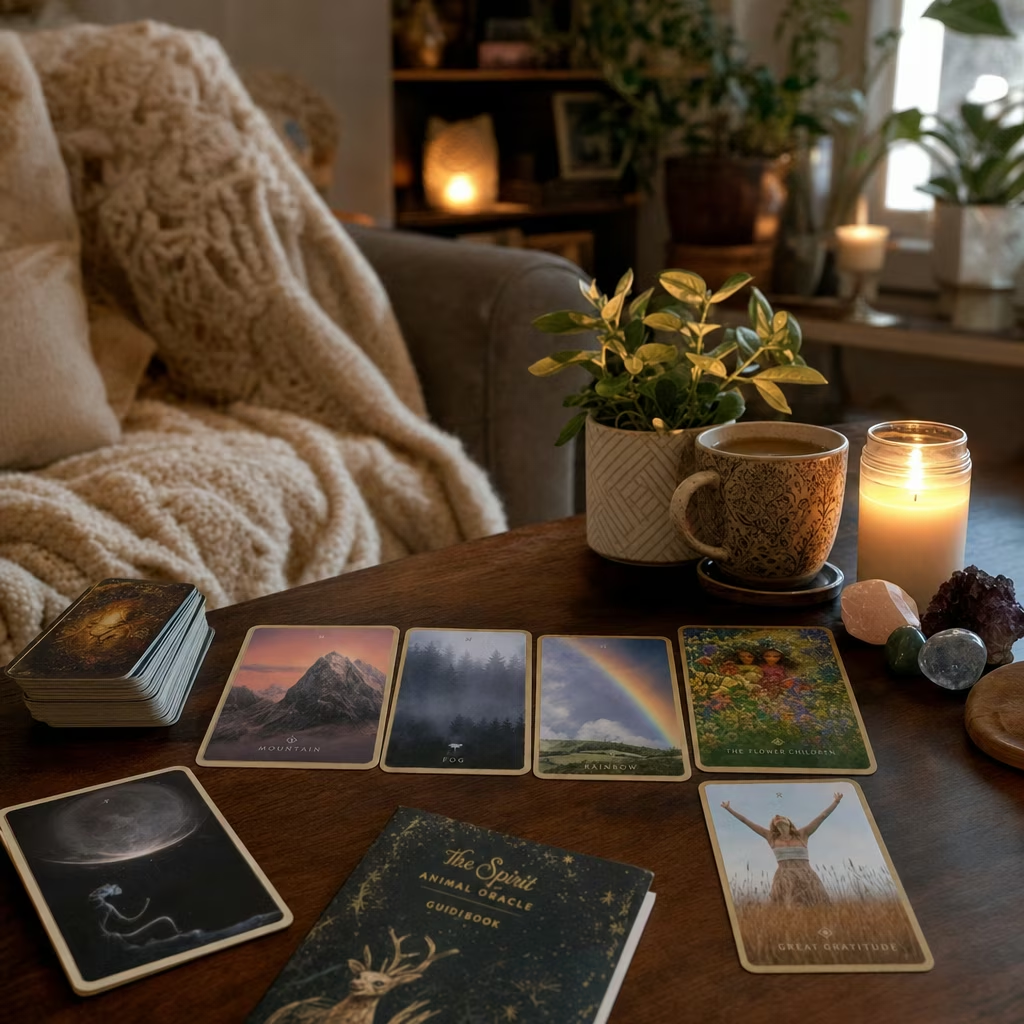
Set the atmosphere. This is optional but effective. A candle, a cup of tea, low lighting, or soft music can help you transition from daily mode into reflective mode. The ritual is not about the objects. It is about the shift in attention they create. Even a few deep breaths before you begin serve the same purpose.

Keep a journal nearby. Writing down your question, the cards you draw, and your impressions immediately after a reading captures insights that fade quickly. A simple notebook is enough. Over time, your reading journal becomes one of the most valuable tools in your practice.
Preparing Yourself
The space is ready. Now prepare yourself.
Settle your mind. Sit quietly for a minute or two. You do not need to meditate formally. Just breathe and let the noise of the day settle. The goal is to arrive in the present moment, because a card reading done while mentally writing your grocery list will produce grocery-list-quality insight.
Form your question. This step deserves real attention. A vague question produces a vague reading. A clear, honest question produces a reading that speaks directly to your situation. If you are unsure how to phrase your question, the guide to asking yes or no questions covers the principles that make questions effective.
Good questions for home readings:
- "Should I pursue this opportunity?"
- "Is this relationship aligned with my growth?"
- "What do I need to understand about my current situation?"
- "Is this the right time to make this change?"
Be honest about what you want to know. Sometimes we ask one question while secretly hoping for an answer to a different one. Take a moment to check: is the question you formed the question you are actually carrying? If not, adjust.
Choosing and Performing Your Spread
For beginners, start simple and expand as your confidence grows.
Single-card pull. Draw one card. This is the foundation of all card reading and a complete practice on its own. One card, one question, one message. It is ideal for daily practice and for building your interpretive instincts.
Three-card spread. Draw three cards for a past-present-future reading or a situation-challenge-advice reading. This adds dimension without overwhelming complexity.
Themed spreads. The Yes No Oracle offers structured spreads for specific life areas: love, health, career, destiny, guidance, and more. These use multiple cards in defined positions, each adding a layer of insight to your question. Using the online oracle for themed spreads takes the guesswork out of spread design and lets you focus entirely on the reading itself.
Your free Oracle reading
A free daily reading that puts words to what you already feel.
Trusted by 10k+ users worldwide
If you are using physical cards, shuffle with intention. Hold your question in mind as you shuffle, and draw when it feels right. There is no correct number of shuffles: trust your instinct.
Reading and Interpreting
With the card or cards in front of you, slow down.
Look before you read. If using physical cards, notice the imagery first. What catches your eye? What feeling does the card evoke before you read its name or description? This first impression carries information.
Identify the core theme. Each card carries a central message. Name it simply: strength, patience, release, clarity, transformation. This theme is the foundation of your interpretation.
Connect theme to question. How does this theme relate to what you asked? A card about patience in response to "Should I push harder at work?" has a clear message. A card about release in response to "Is this relationship right for me?" says something different than the same card in response to "Should I change careers?"
Notice your reaction. Your emotional response to a card is part of the reading. Resistance, relief, surprise, recognition: these are all signals. If you want to go deeper into interpretation techniques, the guide to interpreting angel cards covers this in detail.
Creating a Reading Ritual
A ritual is simply a repeatable structure that helps you transition into reading mode. It does not need to be elaborate.
A simple home reading ritual might look like this:
- Choose your time (morning works well for daily pulls, evening for reflective readings)
- Prepare your space (clear surface, light a candle or pour tea)
- Sit quietly for one to two minutes
- Form your question clearly
- Draw your card or cards
- Sit with the message before reacting
- Write your impressions in your journal
- Close with a moment of quiet acknowledgment
The entire process can take as little as five minutes for a daily pull or up to thirty minutes for a deeper themed reading. Consistency matters more than duration. A five-minute daily practice will develop your reading skills faster than an occasional hour-long session.
Common Questions About Home Readings
Can I read for myself? Absolutely. Self-reading is the most common form of angel card practice, and it offers an intimacy that reading for others cannot match. You know your context, your history, and your inner landscape better than anyone.
How often should I read? As often as you have genuine questions. Many practitioners do a daily single-card pull and a deeper spread weekly or when a specific situation calls for insight. Avoid reading about the same question repeatedly: one clear reading deserves time to be absorbed before you ask again.
What if I get a confusing card? Write it down and return to it later. Not every reading clicks immediately, and some messages need time to reveal their relevance. Confusion is not failure. It is often the beginning of a deeper understanding.
Do I need any special abilities? No. Angel card reading relies on your capacity for honest self-reflection and your willingness to listen to your intuition. These are human abilities, not special gifts. They strengthen with practice.